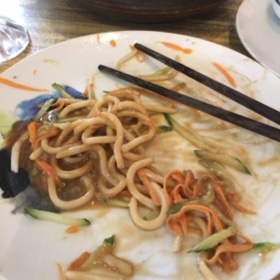
Shanghai Cold Sesame & Mustard Noodles (麻酱芥辣凉面)
East Asian, Summer Dishes
Ingredients
For the sesame sauce:
3 tbsp Chinese sesame paste (zhima jiang)
1 tbsp smooth peanut butter (optional, for body)
2 tbsp light soy sauce
1 tbsp Chinkiang black vinegar
1 tsp sugar
1 tsp toasted sesame oil
1½ tsp Chinese hot mustard powder (or prepared)
1 tsp garlic, finely grated
4 tbsp warm water, to thin
For the noodles:
250 g fresh wheat noodles (thick, e.g. Shanghai or udon-style)
To serve:
1 carrot, julienned
½ cucumber, julienned
1 tsp chili oil, to taste (optional)
Directions
Bloom the mustard:
If using mustard powder, mix it with an equal amount of warm water and let it sit 10 minutes to develop its sharp heat. Skip if using prepared mustard.
Make the sesame sauce:
In a bowl, stir the sesame paste and peanut butter with the warm water, added a little at a time, mixing in one direction until smooth and creamy. Stir in the soy sauce, black vinegar, sugar, sesame oil, garlic and the bloomed mustard. It should be pourable but coating — add more water if too thick.
Cook the noodles:
Boil the noodles according to package instructions until just chewy.
Cool the noodles:
Drain and rinse under cold water until fully cool, tossing to stop them sticking. Drain well — excess water dilutes the sauce.
Assemble:
Toss the cold noodles with the sauce. Top with the julienned carrot and cucumber, and a drizzle of chili oil if you want it spicier. Mix at the table before eating.
Notes
Chewy cold wheat noodles in a nutty sesame sauce sharpened with Chinese hot mustard, topped with julienned carrot and cucumber — reconstructing a bowl Max ate in Shanghai in 2016 (麻酱芥辣凉面, ¥28 on the menu).
On the balance:
The dish's signature is nutty sesame, sharp mustard, tangy black vinegar. Chinese hot mustard (芥末/芥辣) is much sharper than Western — start with less and adjust. Real Chinese sesame paste (芝麻酱, heavily toasted) is what gives the deep nutty flavour; tahini is milder, so toast it briefly or lean on the peanut butter for body.
On the sources:
Closest published source is woksoflove.com's Easy Sesame Noodles (Ma Jiang Liang Mian), linked above — it matches on the sauce backbone including the Chinkiang black vinegar, at the same 2 tbsp soy / 1 tbsp vinegar quantities.
Synthesized, i.e. in NO source: the Chinese hot mustard (芥辣), which is the whole point of this version and comes from the Shanghai menu itself; the julienned carrot; and the sesame-paste-dominant 3 tbsp ratio.
Borrowed from a second source — The Woks of Life, 10-Minute Sesame Noodles (https://thewoksoflife.com/sesame-noodles/): the optional spoon of peanut butter for body, and this note — the famous Shanghai version at Wei Xiang Zhai (味香斋) thins the sesame sauce with the oil from frying pork chops, which is the restaurant secret to its depth. For a vegan version that richness can be approximated with a little extra sesame oil, or a neutral oil infused with scallion.
麻酱凉面 (májiàng liángmiàn) is a genuine classic across China, and the base sesame version is specifically Shanghainese; the 芥辣 mustard addition is a regional variation, not a one-restaurant invention.
This sauce also takes well to a spoon of doubanjiang or a koji-based seasoning if you want more umami — see Shio-Koji (Base).